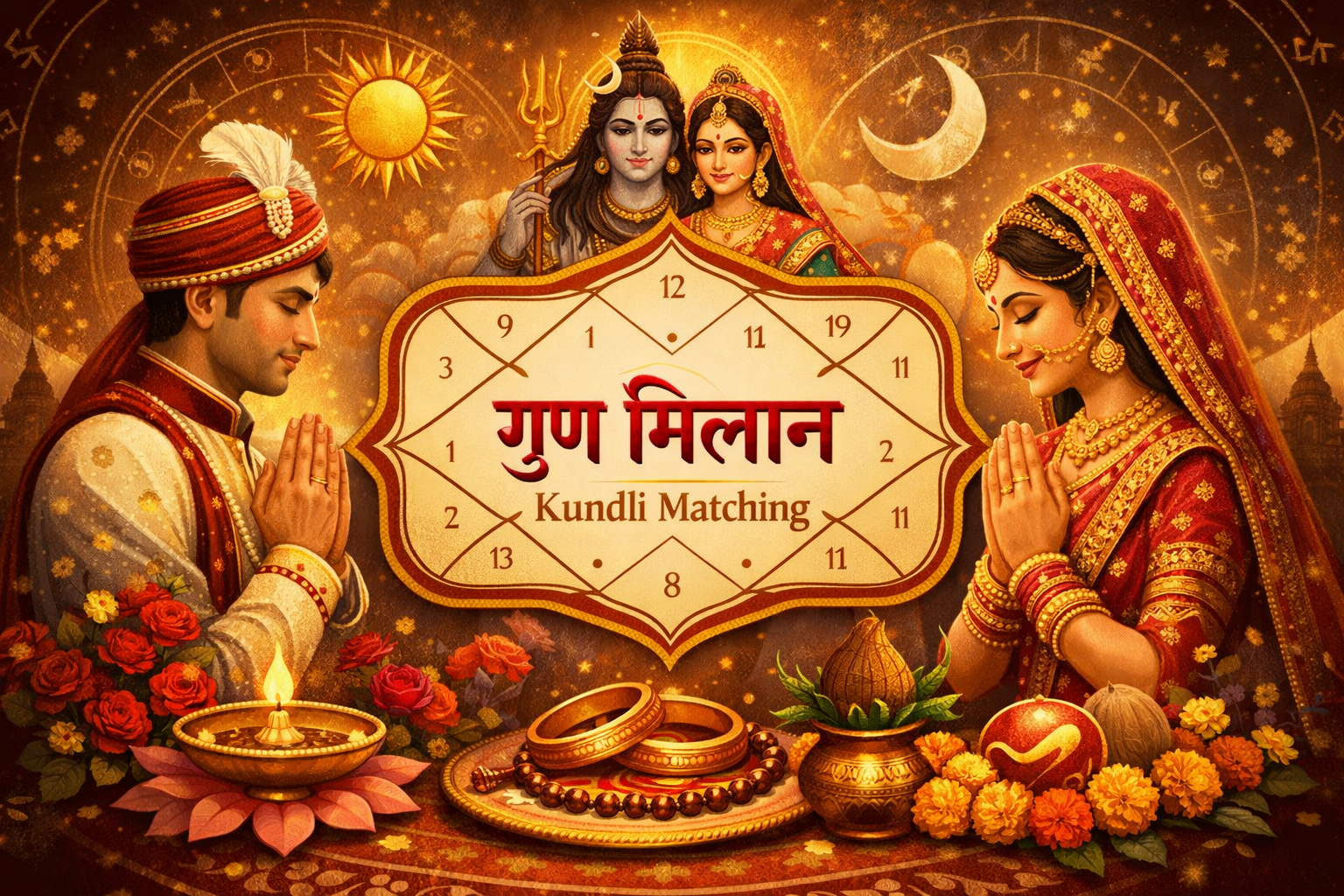
Introduction to Vedic Matchmaking
In Indian culture, marriage is not just a union of two individuals but a merging of two families, traditions, and destinies. Before finalizing a marriage, families often consult Vedic Astrology to check the compatibility between the prospective bride and groom. This process is known as Kundli Matching or Gun Milan.
While many people view this as a ritual, it is actually a complex calculation based on the position of the Moon in the natal charts of both individuals. The primary goal of Gun Milan is to assess whether the couple will have a harmonious life, mental peace, and prosperity together.
In this comprehensive guide, we will explore the logic behind the 36 Gunas, the significance of the "Ashta Koota" system, and what you should do if your score is low.
What is Ashta Koota Milan?
The term "Ashta" means eight, and "Koota" means categories. The Gun Milan system is based on eight distinct categories that test different aspects of compatibility. The total score is 36 points.
Each category carries a specific weightage (points). Let’s break them down from lowest to highest importance:
1. Varna (1 Point) – Spiritual Compatibility
Varna measures the spiritual and ego compatibility between the couple. It classifies individuals into four categories based on their Moon sign: Brahmin (Intellectual), Kshatriya (Warrior/Leader), Vaishya (Merchant/Business), and Shudra (Service).
- Significance: It ensures that there is no clash of egos in the relationship. It checks if the couple can respect each other's working styles and responsibilities.
2. Vashya (2 Points) – Mutual Attraction
Vashya indicates the degree of magnetic control or attraction the partners have over each other. It classifies signs into categories like human, quadruped (animals), water-dwellers, etc.
- Significance: This Koota determines who will be more dominant in the relationship and whether there will be mutual love and affection over the long term.
3. Tara (3 Points) – Destiny and Health
Tara calculates compatibility based on the birth stars (Nakshatras). It assesses the health and longevity of the relationship.
- Significance: A good Tara score suggests that the partners will bring luck to each other's lives. A bad score can indicate health issues or unnecessary struggles.
4. Yoni (4 Points) – Intimacy and Biology
This is one of the most discussed aspects of matchmaking. Yoni represents the sexual and biological compatibility of the couple. Each Nakshatra is associated with an animal (like Horse, Elephant, Serpent, Sheep, etc.).
- Significance: It helps in understanding the physical attraction and satisfaction levels between the partners. Hostile animals (like Cat and Rat) result in 0 points, indicating potential friction.
5. Graha Maitri (5 Points) – Mental Friendship
This tests the friendship between the Moon Sign Lords of the bride and groom. For example, if one person is ruled by Mars and the other by Venus, their compatibility is checked.
- Significance: This is crucial for day-to-day life. It determines communication, mental understanding, and whether the couple can live like friends or will constantly argue.
6. Gana (6 Points) – Temperament
Gana classifies people into three categories: Deva (Divine), Manushya (Human), and Rakshasa (Demon/Fierce).
- Significance: * Deva: calm and spiritual.
- Manushya: practical and hardworking.
- Rakshasa: aggressive and ambitious.
- Ideally, a Deva should marry a Deva or Manushya. A Rakshasa marrying a Deva often leads to personality clashes unless other factors cancel the Dosha.
7. Bhakoot (7 Points) – Emotional Growth
Bhakoot checks the relative position of the Moon signs (e.g., 6-8 relationship or 2-12 relationship).
- Significance: A bad Bhakoot match (Bhakoot Dosha) can lead to financial instability or emotional distance. It is a major factor in determining the overall happiness of the family.
8. Nadi (8 Points) – Health and Genes
Nadi is the most critical factor, carrying the highest points. It is related to the Ayurvedic constitution (Vata, Pitta, Kapha) and genetics.
- Significance: Marriage between people of the same Nadi (Nadi Dosha) is generally discouraged in Vedic texts because it is believed to cause health issues for the progeny (children).
How to Interpret the Score?
The total score is out of 36. Here is a general interpretation used by astrologers:
- Below 18 Points: Not recommended. The marriage might face significant challenges in understanding and harmony.
- 18 to 24 Points: Average match. The marriage can work with effort, patience, and understanding.
- 25 to 32 Points: Very Good match. The couple is likely to have a happy and prosperous life.
- 33 to 36 Points: Excellent match. This is rare and considered highly auspicious.
Is Gun Milan Everything?
This is a common question. "We had 30 points, but we still fight!" or "We had only 16 points, but we are happy." Why does this happen?
The answer is: No, Gun Milan is not everything.
Gun Milan only checks the position of the Moon (Mood and Mind). It does not check:
- Manglik Dosha: The position of Mars (Aggression).
- 7th House Analysis: The house of marriage in the birth chart.
- Venus and Jupiter: The planets of love and wisdom.
A couple might have a low score (e.g., 15/36) but excellent planetary positions in the 7th house, making their marriage successful. Conversely, a high score (32/36) with a severe Manglik clash can lead to disputes.
Conclusion
Gun Milan is a fantastic diagnostic tool provided by ancient sages to filter compatibility. However, it should be the first step, not the final verdict.
If your score is low, do not panic. Consult a knowledgeable astrologer to analyze the individual charts. Often, remedies and conscious effort can overcome astrological barriers. Relationships are built on trust, respect, and love—astrology is simply a guide to help you navigate the path.
Check your compatibility score instantly using our AI-powered Matchmaking tool.